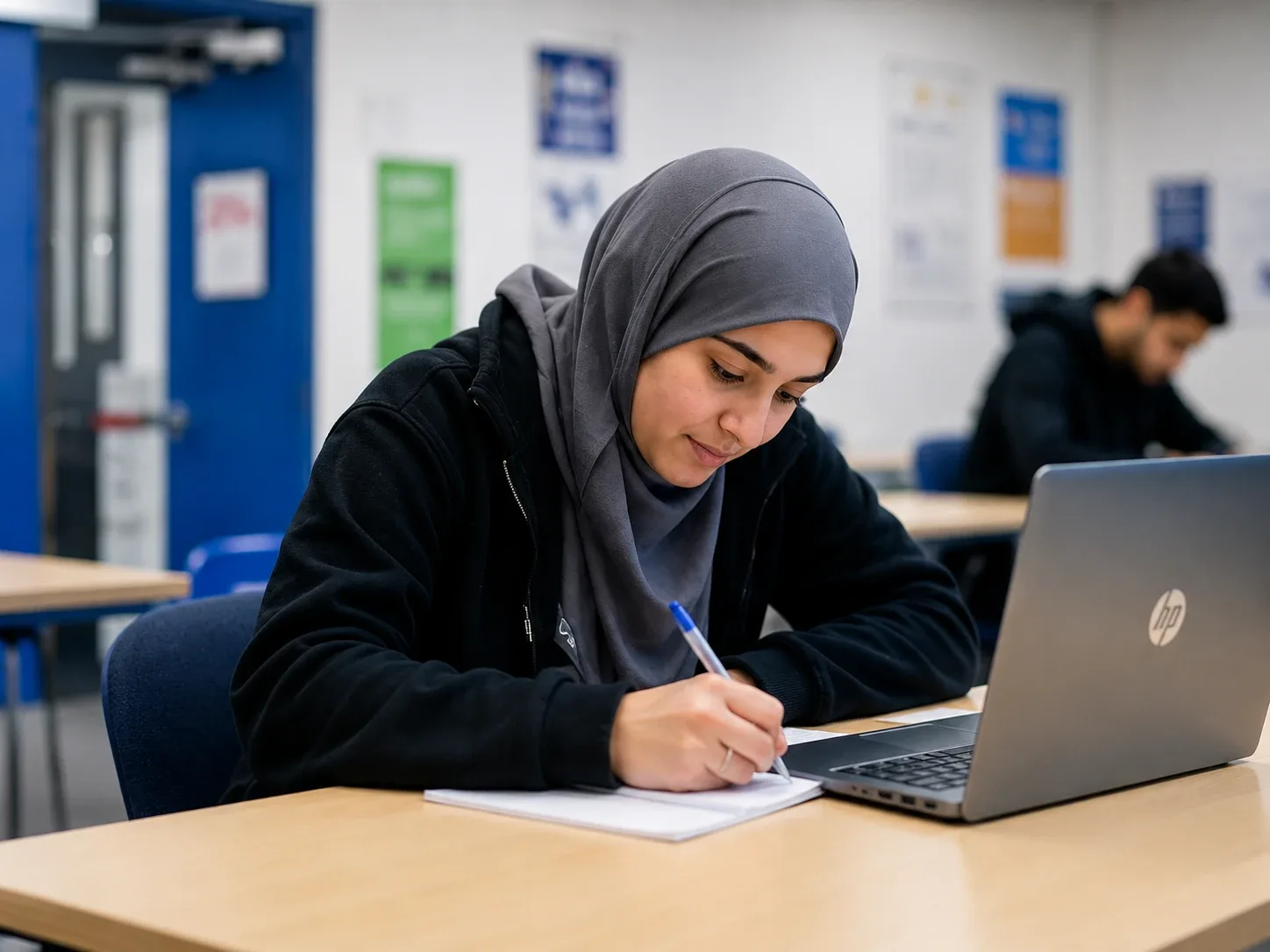
When someone arrives in the UK seeking asylum, the challenges they face are immense. The asylum process itself is complex and heavily reliant on digital systems. Immigration portals, legal documentation, housing applications and healthcare registration all require online access. For someone with limited digital experience, or someone who has never had access to a smartphone or computer, this can feel impossible.
At TechForAll Foundation, we believe that digital skills are not a luxury. For asylum seekers in London, they are a lifeline.
The Digital Challenge Facing Asylum Seekers
The UK Government has progressively moved its public services online. The Home Office portal, NHS registration, Universal Credit, and housing support schemes all require applicants to navigate digital systems confidently. Yet many asylum seekers arrive with little or no experience of these tools.
This is not a lack of intelligence or capability. It is a lack of access. In many of the countries our learners come from, affordable internet connections, personal devices and digital literacy education were simply not available. The digital divide is a global inequality, and when people arrive in the UK, that inequality follows them.
According to research by Good Things Foundation and Refugee Action, up to 50% of refugees in the UK are to some extent digitally excluded. At the end of 2024, Home Office data showed that 73,866 people had been awaiting an asylum decision for longer than six months. For people in this prolonged state of uncertainty, digital exclusion compounds every practical hardship they face.
The consequences are serious:
- Missed appointments and deadlines due to difficulty navigating online portals
- Reduced ability to seek legal advice and understand immigration status
- Inability to apply for work, even when eligible to do so
- Social isolation caused by limited access to communication tools
- Difficulty accessing healthcare and support services
What TechForAll Foundation Provides
Our free digital skills programme for asylum seekers in London is being designed around practical need. Rather than abstract theory, the focus will be on specific skills that participants can use immediately: how to send an email, how to attend a video appointment, how to use the Home Office online service, and how to search for and apply for jobs safely.
Sessions are designed to be delivered in a calm, welcoming environment where learners can progress at their own pace, with trainers committed to making technology feel accessible, not intimidating.
What the programme is designed to cover
- Device basics: using a laptop or tablet, keyboard skills, file management
- Internet and email: creating an email account, sending and receiving messages, staying safe online
- Online public services: registering with a GP, accessing the Home Office portal, using gov.uk
- Job searching: creating a CV digitally, using job boards, attending online interviews
- Communication tools: video calls, messaging platforms and staying connected with family
Why This Work Matters
The number of people seeking asylum in the UK continues to rise. According to the ONS, around 13.1 million people living in the UK were born overseas as of June 2024, representing 19% of the total population. Among people with refugee or asylum seeker status specifically, Breaking Barriers research shows they are around three times more likely to be unemployed than UK-born residents, while the Nuffield Foundation found that asylum migrants earn 55% less per week on average than UK-born workers.
Crucially, 94% of asylum seekers want to work, according to Refugee Action. Employment support, English classes and digital skills training are among the most effective interventions available. The Commission on the Integration of Refugees estimated that faster processing and access to employment support could deliver a net economic benefit of £1.2 billion within five years. Many of the people who would benefit from those programmes are highly skilled individuals, including engineers, teachers, healthcare professionals and entrepreneurs, who need the opportunity to demonstrate what they are capable of. Digital skills are frequently the first step.
The programme also aims to provide refurbished laptops and tablets to learners who do not have access to a device at home. A training session is only as valuable as a learner's ability to practise and build on what they have learned. Access to a device makes that possible.
How You Can Help
Our work is made possible by donations, volunteering and the generosity of individuals and organisations who believe that everyone deserves a fair chance. If you have a laptop or tablet you no longer use, donating it through our equipment programme can transform someone's opportunities. If you can offer financial support, every contribution goes directly into delivering training and placing devices with people who need them.
Digital inclusion is not a technical problem. It is a human one. And it has a human solution.
Support Our Digital Inclusion Work
Help us provide free digital skills training and refurbished devices to asylum seekers and refugees in London.