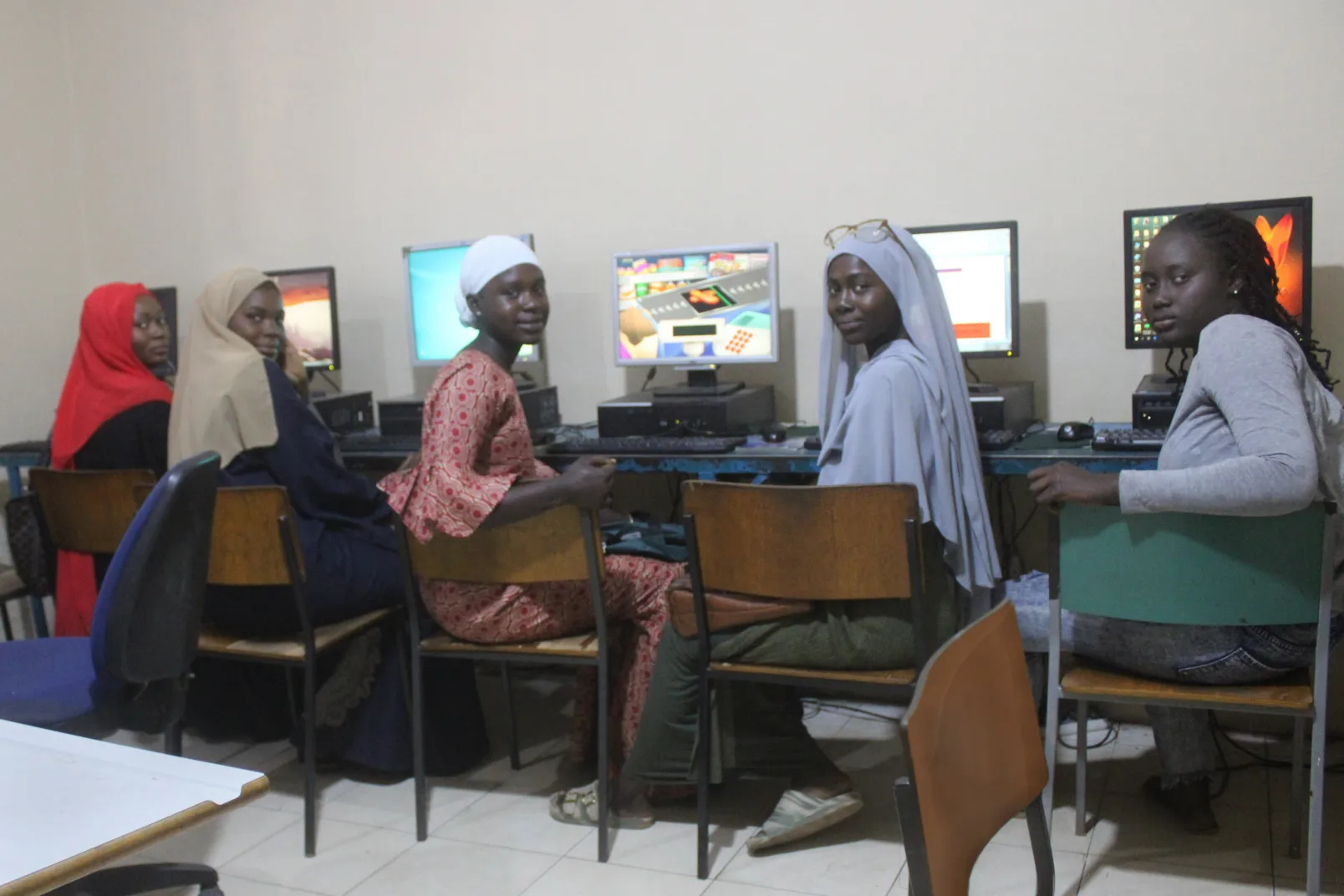
When TechForAll Foundation launched its Girls In Tech programme in The Gambia, the question we were asked most often was: what happens afterwards? The training happens in the IT centre. The real test is what graduates do when they leave.
Eighteen months in, we can answer that question with confidence. The graduates of our Girls In Tech programme are going on to study computing and engineering at university. They are securing internships with technology companies. They are returning to their schools and communities as digital mentors, teaching what they have learned to younger girls. And they are applying for roles in sectors that had previously seen almost no female applicants with technical backgrounds.
The programme works. Here is why.
What Happens During the Programme
Girls In Tech is not a one-off workshop or an introductory taster session. It is a structured programme built around a full curriculum, not a fixed weekly timetable. Participants attend sessions at TechForAll Foundation's IT centre, working on real computers with reliable internet access, guided by trained instructors who understand both the technology and the learners.
The curriculum covers four core areas, each building practical, real-world skills:
- Computer software and hardware: understanding how computers work, what the components do, how to navigate an operating system and how to keep a device running well
- Microsoft Office products: hands-on training in Word, Excel and PowerPoint, the tools used in almost every workplace, giving participants skills they can apply immediately
- Basic IT networking: an introduction to how networks connect devices and people, laying the groundwork for further study in IT infrastructure
- Basic IT security: understanding how to stay safe online, recognise threats and protect personal and organisational data
Progress follows the learner, not a rigid timetable. Instructors work with participants at a pace that builds genuine understanding rather than rushing through material. For many participants, this is the first time they have worked with technology in a structured, supportive environment, and the confidence that comes from truly understanding what they are doing is as important as the skills themselves.
What Graduates Go On to Do
The outcomes we track are straightforward: further education, employment and community contribution. Across the cohorts we have run, graduates have:
- Gone on to enrol in computing, information technology and engineering programmes at university
- Gained confidence in their day-to-day use of computers, applying their skills at home, in education and in their communities
- Continued developing their IT knowledge through further study and self-directed learning after completing the programme
- Taken on volunteering roles, apprenticeships and entry-level positions to build practical work experience in technology and related fields
"When I finished the programme, I applied to study IT at university. I never thought that was possible for me. The training gave me both the skills and the confidence to try."
Breaking the Cycle of Underrepresentation
One of the most powerful outcomes of Girls In Tech is one that does not appear in any employment statistic: the shift in what younger girls believe is possible for them.
When a 12-year-old girl sees a 20-year-old woman from her own community working in technology, the message is immediate and powerful. It is not abstract inspiration. It is concrete proof that the path exists and that someone from here has already walked it.
Representation matters in every sector. In technology, where the lack of diversity is well documented and widely discussed, it matters enormously. Every graduate of Girls In Tech who enters the technology workforce becomes part of the solution to a problem that starts long before employment: the assumption that technology is not for women.
The Role of the IT Centre
None of this would be possible without a physical space to learn in. TechForAll Foundation's IT centre in The Gambia provides something that many communities in the region simply do not have: a dedicated, safe, well-equipped place where girls and young women can work with technology without interruption, without judgment and without cost.
The centre is stocked with computers, has reliable power and internet connectivity, and is staffed by trained instructors. It is open to programme participants during sessions and, increasingly, to graduates who return to continue learning, practise their skills or support newer cohorts.
How You Can Help
The Girls In Tech programme is entirely funded by donations. Every contribution goes towards equipment, instructor time, electricity, connectivity and the programme materials that make the sessions possible. A regular monthly gift helps us plan ahead and ensure continuity for future cohorts.
If you want to invest in the future of young women in The Gambia, this is one of the most direct ways to do it.
Invest in Girls In Tech
Your support funds places on our programme, equipment for the IT centre and the instructors who make it all happen.