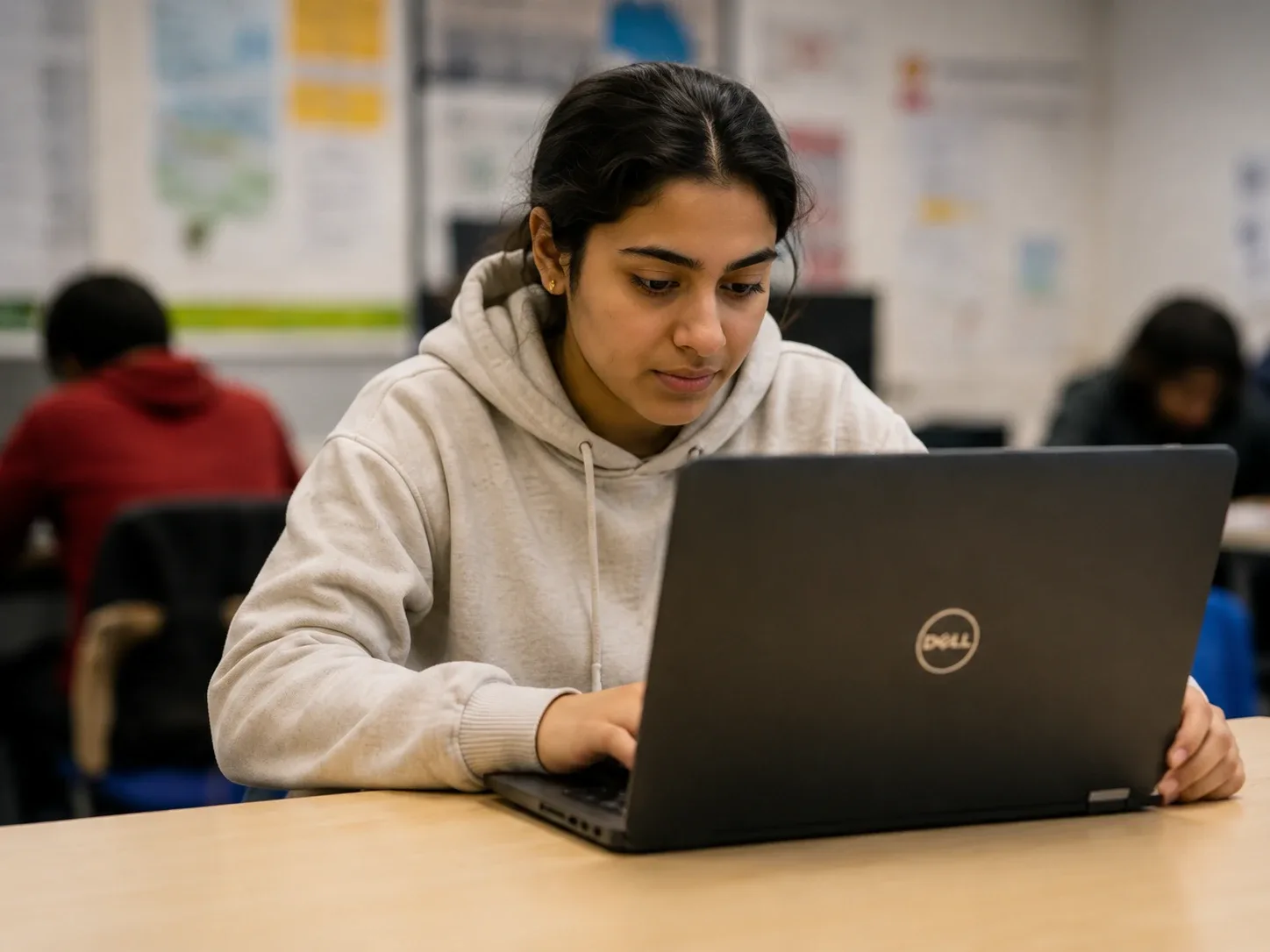
When someone arrives in the UK as a migrant or refugee, they face an enormous amount of uncertainty. Housing, legal status, language barriers, and finding income are all immediate pressures. What is often overlooked is how the digital divide compounds every one of these challenges.
Without basic digital skills, it is harder to navigate online systems for housing or benefits. It is harder to apply for work. It is harder to communicate with schools, healthcare providers, or support services. In a world where so much of daily life has moved online, digital exclusion can mean practical, day-to-day hardship.
TechForAll Foundation exists to change that. Our UK programme is being developed to provide free IT training for migrants and refugees in London, helping people build the digital confidence they need to access services, find employment and take the next step in their lives.
Why Digital Skills Matter for Migrants and Refugees
The scale of the challenge is significant. According to the Office for National Statistics, around 13.1 million people living in the UK were born overseas as of June 2024, representing 19% of the total population. Many arrive from countries where affordable internet, personal devices and digital literacy education were simply not available.
Research by Good Things Foundation and Refugee Action found that up to 50% of refugees in the UK are to some extent digitally excluded. Separate data from Good Things Foundation's 2024 report shows that 8.5 million adults in the UK as a whole still lack basic digital skills. For people newly arrived in the country, that gap is frequently wider.
The consequences are significant:
- Job applications are submitted online, and CVs are formatted digitally
- Government services, from Universal Credit to the Home Office, require internet access to navigate
- Remote work opportunities are inaccessible without digital skills
- Communicating with family, schools and employers requires email, video calls and messaging platforms
Free digital skills training is not just a nice-to-have. For many people, it is the bridge between isolation and independence.
What TechForAll Foundation's Refugee Digital Support Programme Aims to Offer
Our free digital skills programme for migrants and refugees in London is designed around practical, real-world needs. Rather than abstract theory, the focus is on skills that participants will actually use, both in the week after the session and in the years ahead.
What the programme is designed to cover
- Computer basics: using a mouse, keyboard, files and folders, and navigating an operating system
- Internet safety: recognising scams, protecting personal information, using passwords safely
- Email and communication: setting up and using email, video calling, and online messaging
- Online services: accessing government portals, healthcare, housing, and benefits systems
- Job application skills: writing a CV digitally, searching for jobs, and completing online applications
- Employability support: guidance on interview preparation, professional communication, and building a digital presence
For learners who want to go further, the programme aims to connect participants with mentors from the technology industry who can provide career guidance and introduce pathways into IT roles.
Who the Programme Is For
This programme is being developed for migrants and refugees living in London who want to build their digital skills. Referrals will be welcomed from local organisations, support groups, schools, and healthcare providers. Individuals will also be able to self-refer by contacting us directly.
The programme is designed to welcome participants at all skill levels, whether someone has never used a computer before, or needs to improve their confidence and employment-ready skills.
Donated Technology That Changes Lives
One of the practical barriers to digital inclusion is access to equipment. TechForAll Foundation also aims to redistribute donated laptops, desktops and tablets to learners who need them. Through our IT equipment donation programme, supported by corporate partners and individual donors, the goal is to ensure that people can continue practising and developing their skills beyond the training room.
Technology that would otherwise sit unused in a corporate storage room or be sent to recycling can instead become the device that helps someone write their first CV, apply for their first job in the UK, or connect with a family member overseas. The impact of a single donated laptop can be profound and lasting.
Why Digital Inclusion Is Central to Integration
Successful integration in the UK requires access to services, employment, community and information. Digital exclusion creates an invisible but real barrier to all of these things.
Research from Breaking Barriers shows that refugees are around three times more likely to be unemployed than people born in the UK. The Nuffield Foundation has found that asylum migrants earn 55% less per week than UK-born workers on average. Digital skills are not the only factor, but they are one of the most addressable ones. Charities, local authorities, NHS services and employers are increasingly delivering services digitally. When someone cannot navigate these systems, they are cut off from the support they need.
Free IT training is one of the most direct and cost-effective interventions available to tackle this.
TechForAll Foundation is committed to being part of the solution, working alongside community organisations, support services, and corporate partners to make digital inclusion a reality for migrants and refugees in London.
How You Can Help
Our programme depends on the support of donors, corporate partners, and volunteers who believe that technology should be a bridge, not a barrier.
- Donate funds to help cover training costs, materials and support
- Donate IT equipment, laptops, desktops and tablets in working condition
- Volunteer or mentor, share your skills with someone building a new future
- Refer a learner, if you work with migrants or refugees, get in touch to discuss referrals
- Partner with us, align your organisation's CSR goals with measurable digital inclusion impact
Ready to support free IT training for refugees in London?
Every contribution, whether a donation, a donated laptop, or an hour of mentoring, helps someone build confidence, find work, and take the next step.
TechForAll Foundation is a registered charity in England and Wales, charity number 1211494. We are based in London and work across the UK and The Gambia to advance digital inclusion through free training, donated technology, employability support and mentoring.
For referrals, partnerships or enquiries, contact us at info@techforallfoundation.org or call 0300 302 0456.